


The week before Labour Day, a school facilities manager in Waterloo Region walks the parking lot and drop-off area they have been ignoring all summer. The potholes near the rear entrance have expanded. The painted lane arrows in the parent pick-up zone are barely visible. A catch basin near the bus loop is sitting low, and the adjacent asphalt has started to edge-crack. In ten days, hundreds of families will funnel through that space twice a day.
That is the scenario we see repeated every August and early September across Cambridge, Kitchener, Guelph, Waterloo, and the surrounding communities we serve. And almost every time, the issues could have been addressed in June or July, at lower cost, with less disruption, and without the pressure of an imminent opening day.
This guide is for property managers, school board facilities teams, daycare operators, and commercial property owners responsible for educational or institutional sites. Here is what to assess, what to repair, and how to get it done before the back-to-school rush turns your parking lot into a liability.
Why School Parking Lots Fail at the Worst Possible Moment
School parking lots and drop-off areas experience a traffic pattern unlike almost any other commercial environment. Outside of September, December, and June, these surfaces sit relatively quiet. Then, in the span of a few days, they go from near-zero daily use to handling hundreds of vehicle movements twice a day, parents idling, buses making wide turns, staff vehicles parking at odd angles, and delivery trucks cutting through.
That rapid shift from dormant to high-intensity use is hard on surfaces that have not been maintained. Asphalt that has been sitting and oxidizing through a July heat wave does not have the flexibility it once did. Sub-base moisture from spring thaw may not have fully resolved. A crack that was cosmetic in April becomes a trip hazard by September.
The timing problem is also real. Most paving and asphalt repair work in Ontario requires consistent ambient temperatures for proper compaction and curing. By late August, that window is still open, but it closes quickly as you move into October. Waiting until an issue becomes undeniable often means waiting until the fix is less effective or more expensive.
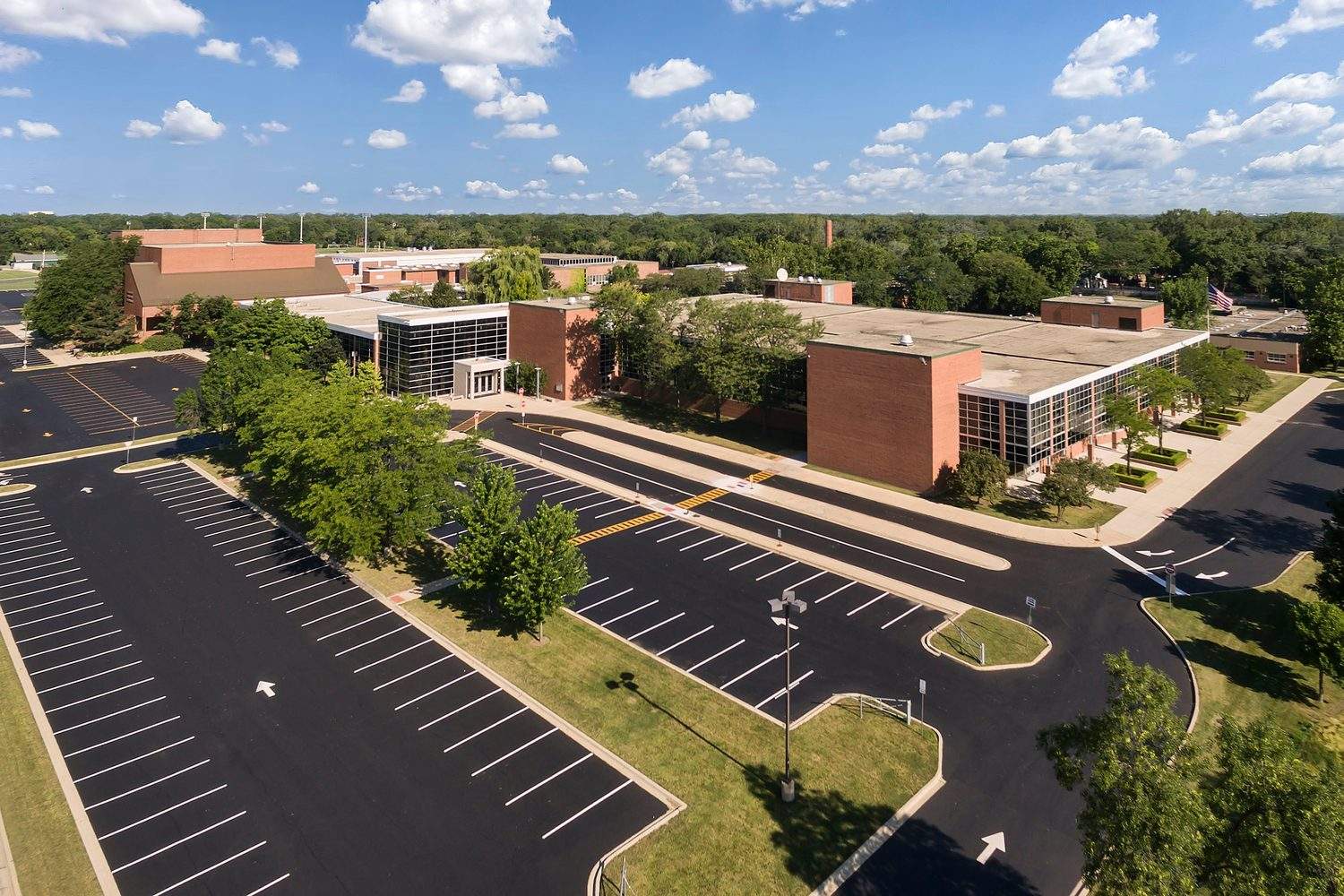
The September Surface Reality: What a Summer Does to Asphalt
Ontario summers put real stress on commercial asphalt. UV oxidation is the least discussed but most consistent form of asphalt degradation, direct sunlight breaks down the binder in the asphalt mix, causing the surface to become brittle, dry, and prone to raveling. A parking lot that has not been sealed in several years will show visible graying and texture loss by August.
Heat also softens the top layer of asphalt, making it more susceptible to deformation under load. Parking lots that see regular heavy vehicle use, garbage trucks, delivery vans, and school buses, can develop rutting and surface indentations during prolonged hot periods. These depressions then become drainage problems once rain and snow arrive.
What is more, any crack that existed entering summer has likely widened. Expansion from heat and contraction from overnight cooling work together to open cracks that looked manageable in spring. Once water infiltrates those cracks, the sub-base is at risk, and sub-base failure is the most expensive problem a parking lot can develop.
Drop-Off Zones Are Not Parking Lots, Stop Treating Them the Same
This is the counterintuitive piece most property managers do not hear until it is too late: school drop-off zones fail faster than the main parking lot, and they need to be assessed separately.
The reason is load pattern. A parked car distributes its weight evenly across four contact points. A vehicle that stops briefly in a drop-off lane, idles, then accelerates, repeatedly, hundreds of times per day, creates concentrated stress in very specific spots. The areas near where vehicles consistently brake and pull away develop surface distress faster than anywhere else on the property.
Add to that the turning radius requirements for school buses. Buses exert significantly higher load per axle than passenger vehicles, and the tight turning patterns common in school layouts put torsional stress on edge sections, curb cuts, and the outer edge of the asphalt. These areas crack first, and those cracks become the entry points for water.
When you are walking your property before September, treat the drop-off loop, bus turnaround, and accessible parking approach zones as priority inspection areas, not afterthoughts to the main lot.
The Pre-Season Inspection Checklist Every Property Manager Needs
A proper pre-season walkaround on an institutional site covers more ground than most people expect. Here is what to document:
- Surface cracking. Note the type (linear, alligator/block, edge cracks) and approximate width. Wider cracks that show signs of movement need filling before fall.
- Potholes and depressions. Even shallow depressions indicate sub-base movement and should be flagged for professional assessment.
- Drainage and ponding. Walk the lot after a rain, or run water from a hose, to identify low spots where water is sitting.
- Catch basin condition. Look for settled basins sitting noticeably below the surrounding pavement surface.
- Line markings. Check pedestrian crossings, parking stalls, accessible spaces, and directional arrows. Markings that are significantly faded need restriping.
- Curb and edge integrity. Check the edges of the asphalt where it meets curbs, sidewalks, or landscaped areas for crumbling or separation.
- Lighting and signage anchor points. Potholes or heaving near signposts or light standards are a quick liability indicator.
Line Striping, Signage, and the Safety Details That Get Missed
Faded line markings are one of the most commonly deferred maintenance items at institutional sites, and one of the highest-liability ones. In Ontario, accessible parking stalls must meet specific dimensional and visibility requirements. If the markings identifying those stalls are not clearly visible, the property owner is exposed.
Beyond compliance, clear striping directly affects traffic flow in drop-off zones. Schools that have refreshed their parent pick-up lane markings, directional arrows, and pedestrian crossing lines report fewer near-miss incidents and faster throughput during morning and afternoon rush periods. A chaotic drop-off zone is a safety issue, not just an aesthetic one.
Parking lot line restriping is most effective and durable when done on a clean, dry surface after any crack filling or patching work is complete. If you are sequencing your pre-season repairs, line work comes last, never first.
For sites with recent asphalt work, new pavement needs adequate curing time before line paint is applied. Your contractor can advise on the right window based on the type of paint and current surface conditions.
When Repairs Need to Happen Before Day One
Not every surface issue requires a full repaving project. Understanding the right repair type for the condition is how you protect your budget and get the work done in time:
- Crack filling. Used for cracks with no structural base movement. Hot rubberized crack filler seals out water and can meaningfully extend the surface life of a well-maintained lot. Your contractor can advise on cure time before reopening to traffic.
- Asphalt patching (cold or hot mix). Used for potholes and localized failures. Hot mix patching provides a more durable, long-lasting repair than cold-pour patch products. Areas can typically be reopened relatively quickly after work is complete.
- Infrared asphalt repair. A thermal process that reheats existing asphalt, allows for re-compaction, and produces a seamless repair. Effective for edge failures, sunken drain areas, and surface-level depressions without full excavation.
- Catch basin repair. Sunken or cracked catch basins need concrete collar restoration or full frame replacement depending on severity. A basin sitting well below grade creates a vehicle impact hazard and accelerates surrounding pavement failure.
- Asphalt overlay. For surfaces that are structurally sound but heavily oxidized or riddled with surface cracking, an overlay can restore function and extend the life of the lot considerably, depending on traffic loads and base condition.
- Full mill and repave. Reserved for lots where the sub-base has failed or damage is extensive. When a large portion of the surface area shows structural distress, a full repave is typically more cost-effective than a series of ongoing repairs.
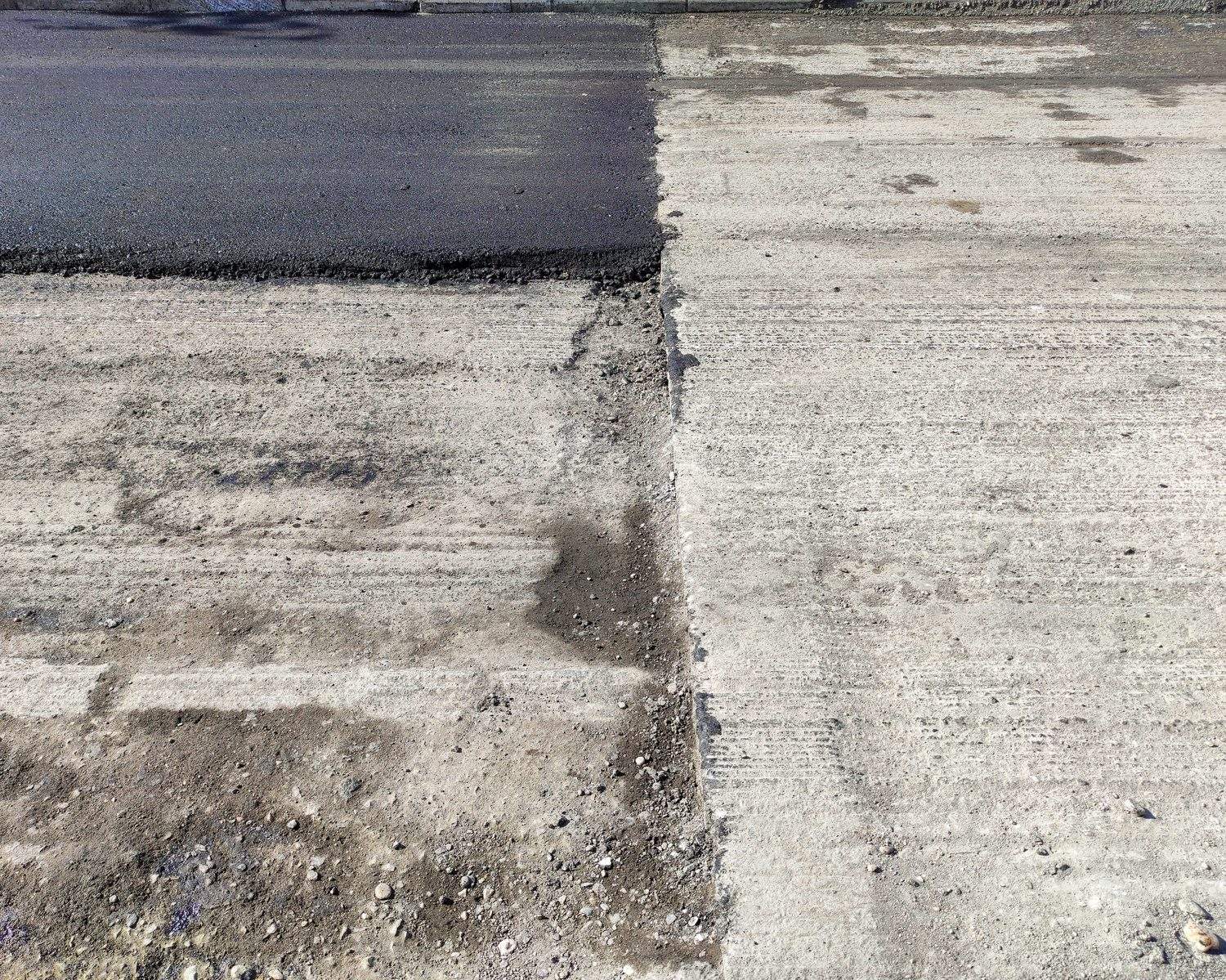
Working With a Commercial Paving Contractor in Southwestern Ontario
Choosing the right paving contractor for a school or institutional site involves more than comparing quotes. You need a team that understands the scheduling constraints of educational facilities, work that cannot interrupt the school day, access coordination with custodial staff, and the ability to phase repairs so the lot never goes fully offline.
At 5 Star Paving, we have been serving commercial, institutional, and municipal clients across Cambridge, Kitchener, Guelph, Waterloo, Hamilton, and the broader Southwestern Ontario region since 2002. Our team is fully accredited through the Better Business Bureau and members of both the Grand Valley Construction Association (GVCA) and the Infrastructure Health and Safety Association (IHSA), so safety standards and workmanship quality are documented commitments, not just talking points.
We are also active in our local communities as chamber of commerce members in Cambridge, Guelph, and Kitchener-Waterloo. When a property manager in the Region of Waterloo calls us, they are calling a local contractor who has a reputation to protect on the same streets their clients drive every day.
If you are managing a school, daycare, place of worship, medical clinic, or commercial property with an institutional component, the time to schedule your pre-season assessment is now, not after the first parent complaint about a pothole in the pick-up lane.
Need a professional eye on your parking lot or drop-off area before September? 5 Star Paving offers on-site assessments for commercial and institutional properties across Southwestern Ontario. Reach out to schedule yours.
FAQs: Parking Lot Prep for Educational Facilities
How long does asphalt patching take to cure before the lot can reopen?
Hot mix asphalt patches firm up relatively quickly under normal Ontario summer conditions, your contractor can give you a realistic timeline based on the size of the repair and current temperatures. For institutional sites, scheduling patch work at the end of a school day or over a weekend is usually the most practical approach.
Do I need a full repave, or will crack filling hold for another season?
It depends on the extent and type of damage. Surface-level cracking with no base movement can often be managed with hot rubberized crack fill and sealcoating. Alligator cracking, the interconnected web-like pattern, typically signals base failure and requires patching or overlay, not just filling. A proper site assessment will tell you which category you are dealing with.
Can line restriping be done without repaving?
Yes. Line restriping can be applied directly to existing asphalt as long as the surface is clean, dry, and structurally sound. It is one of the most cost-effective improvements a property manager can make for safety and organization.
What is the best time of year to schedule paving work near schools in Ontario?
June through early September is ideal, temperatures are consistent, the ground is dry, and educational facilities have reduced or no traffic during summer months. Booking early in the spring is the best way to secure a spot on a contractor’s summer schedule, particularly for larger projects.
How do I know if my parking lot has a drainage problem?
Standing water after rainfall is the most obvious sign, but drainage issues often show up first as surface cracking near low spots, accelerated edge deterioration, or catch basins that appear sunken relative to the surrounding pavement. A site walkthrough after a rain event is the simplest diagnostic step.